By Zainab Muhammad Sabitu
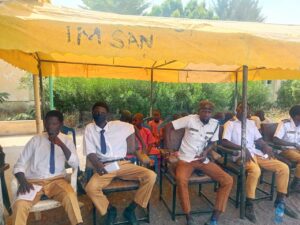
Community leaders, government officials, and international partners have teamed up in Ningi Local Government Area of Bauchi State to ensure that every household has access to a clean, safe, and affordable toilet.
The event took place on Thursday to mark the 2026 World Toilet Day, which carries the theme “Safe Toilets, Equal Futures.”
It was organized by the United Nations Children’s Fund (UNICEF) in partnership with SATO a sanitation company under LIXIL Corporation and the Bauchi State Rural Water Supply and Sanitation Agency (RUWASSA).
This year’s celebration focuses on how safe toilets protect women and girls, improve public health, and stop the spread of deadly diseases like cholera and diarrhoea.
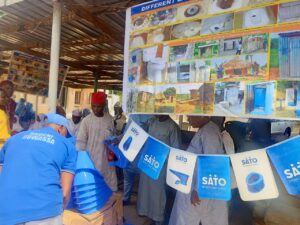
Speaking on behalf of the General Manager of RUWASSA, the Assistant General Manager for Sanitation, Alhaji Bala Zailani, explained that keeping Ningi free from open defecation only works because government agencies, development partners, and private businesses are working together.
“The achievement and sustainability of Open Defecation Free (ODF) status in Ningi Local Government Area is a product of strong collaboration between the Bauchi State Government through the Rural Water Supply and Sanitation Agency (RUWASSA), UNICEF Bauchi Field Office, and LIXIL, the manufacturer of the SATO Pan sanitation technology,” Zailani said.
Through this teamwork, local business owners are trained to supply affordable SATO toilet pans to families, while government officials teach communities how to maintain good hygiene. Zailani stressed that simply building toilets is not enough without lasting support from the people.
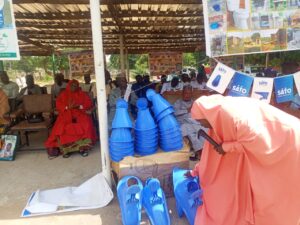
“The partnership demonstrates that achieving and sustaining ODF status requires more than toilet construction; it demands strong government leadership, development partner support, private-sector innovation, and continuous community commitment,” he added.
Also speaking at the event, RUWASSA Sanitation Officer, James Zakka, reminded residents that World Toilet Day is marked every November 19 because clean toilets are a basic need for every human being.
“The commemoration is particularly important because access to safe toilets is a fundamental requirement for good health, human dignity, environmental protection, and sustainable development,” Zakka said.
He noted that when a community lacks proper toilets, women, young girls, children, and people living with disabilities suffer the most because they lose their privacy and face safety risks.
“It highlights the need to eliminate inequalities in sanitation access, particularly among women, girls, children, persons with disabilities, and vulnerable households,” Zakka explained.
He urged everyone in Ningi to work together so that no family is left behind.
“Achieving a safe and equal future requires collective efforts to make safe toilets accessible, affordable, inclusive, and sustainable for all,” he added.
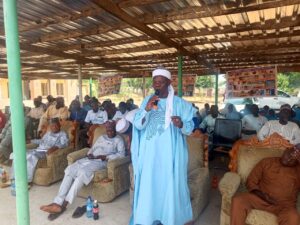
The gathering brought together local council officials, traditional rulers, civil society groups, and residents who all promised to support clean sanitation across Ningi.