By Zainab Muhammad Sabitu
Across the world, an estimated 650 million living women and girls were married during childhood, a stark statistic reflecting that nearly one in five girls globally is forced into marriage before her 18th birthday.
According to 2026 estimates from the United Nations Children’s Fund (UNICEF), the global crisis is further compounded by violence and educational exclusion, nearly one in four evermarried adolescent girls aged 15 to 19 have faced intimate partner violence in their lifetime.
Furthermore, girls in fragile and conflict affected contexts are nearly 90 per cent more likely to be out of secondary school than those in stable environments increasing their risk of child marriage.
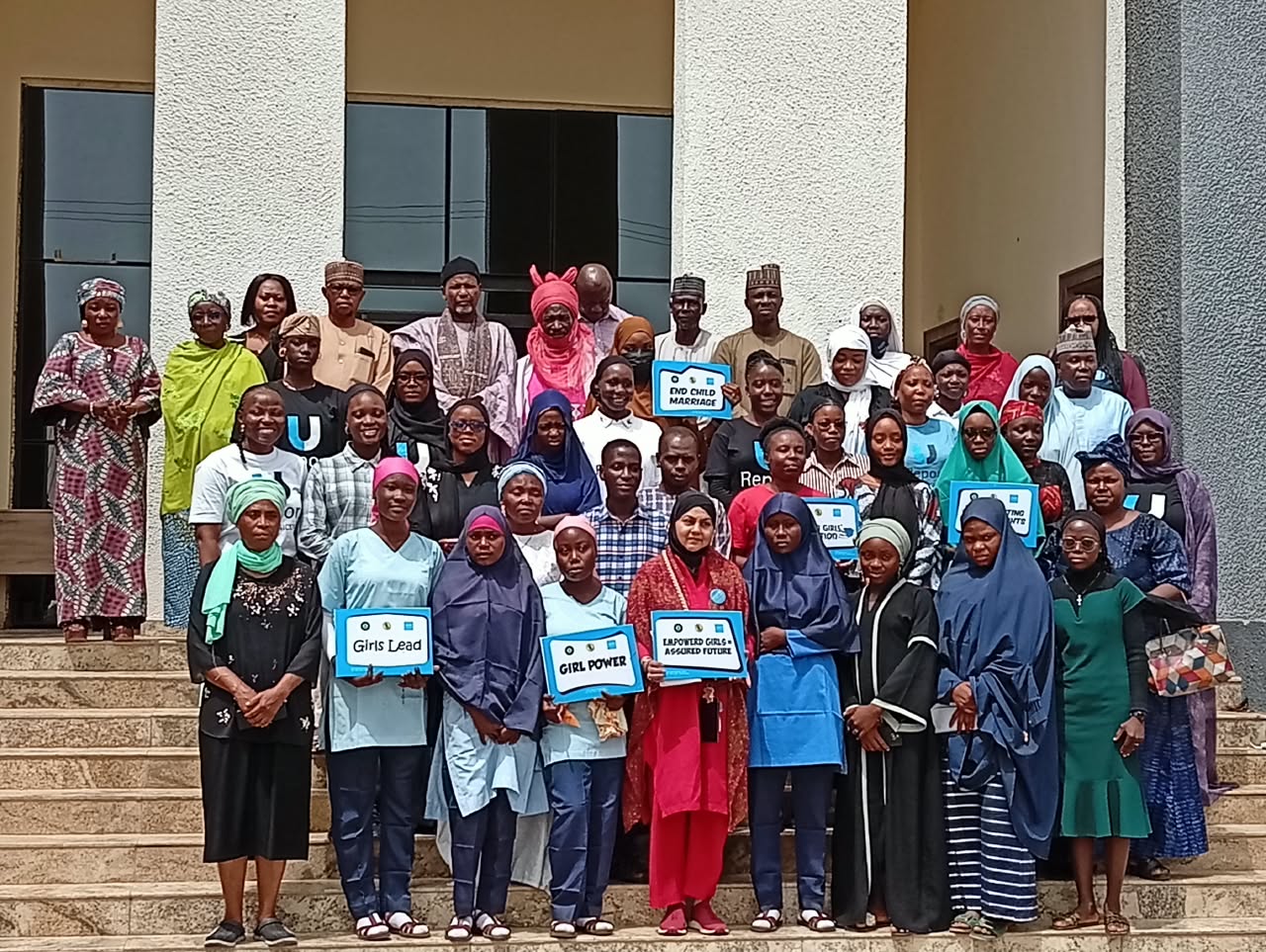
Against the backdrop of these alarming figures, key stakeholders, traditional leaders, women’s advocacy groups, and adolescent girls from Bauchi and Gombe states gathered at the Maidugu Hotel in Gombe to tackle the local impact of this international crisis.
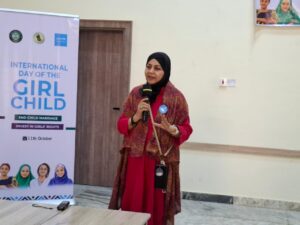
Organized by the UNICEF to commemorate the International Day of the Girl Child under the theme “End Child Marriage and Invest in Girls’ Rights,” the engagement focused on practical measures to strengthen the rights, wellbeing, skills, and opportunities of young girls.
Speaking during the engagement, the UNICEF Chief of Bauchi Field Office, Dr. Nuzhat Rafique, warned that high rates of early marriage in both Bauchi and Gombe threaten the region’s socioeconomic future if left unaddressed.
“The recent data tells us that in Bauchi, there is a very high percentage of child marriage and early marriage. This is also prevalent in Gombe as well. We cannot ignore this issue because if child marriage does not end, girls will not get the right opportunities to grow to their best potential. If girls are behind, then the nation will be behind,” Rafique stated.
Emphasizing the responsibility of nations to empower their female population, Rafique highlighted the broader impact of educating young women.
“When we look at many countries around the world, we see that women and girls are being given greater opportunities to access education, attend higher institutions and achieve their full potential. One of the most important responsibilities of any country is to provide equal opportunities for education and development to everyone, regardless of whether they are male or female,” she said.
“There is a saying that if you give us good mothers, we will give you a good nation. The strength of a nation depends greatly on the strength and wellbeing of its mothers. Women make up about half of the population. If women are not educated and empowered, how can they adequately protect and support their children? So how can a society progress when half of its population is left behind?” she asked.
Rafique also stressed the need for positive parenting and cross collaboration involving traditional rulers, community figures, and government institutions in education, health, and social sectors.
“Positive parenting is one of the key interventions because the decision is in the hands of parents, especially fathers. Only positive parenting can have an impact at the community level for people to make the right decisions about their daughters and sisters,” she noted.
“Therefore, traditional leaders and representatives from the education, health and social sectors, as well as women organisations and civil society, must all be involved. These are the people who need to take action and work together with government.”
“That is why we must all support the education and empowerment of women and girls. We must also stand firmly against child marriage. Let children be children. Let them go to school, grow in a safe environment and have the opportunity to determine their future,” Rafique urged.
Addressing the structural drivers of early unions, UNICEF Bauchi Field Office Child Protection Specialist, Lafiya Alabi, cautioned against treating harmful social traditions as unchangeable cultural standards.
“One of the things that we find to be a very big challenge in the holistic realisation of the rights of the girl child is the issue of social norms, the practices that we are so used to within our environment. Everybody is doing it in a simple form. It looks like that is what everybody does. It looks like that is what I have to do and what everybody else has to do. These things become like social laws around us,” Alabi explained.
Alabi further warned about the severe physical and career setbacks caused by premature withdrawal from school for early marriage.
“Once a girl drops out of school for adoption of school in JSS1, JSS2 or JSS3 to get married, the whole horizon of the girl-child is destroyed because the girl’s chances are much less,” he said, adding that UNICEF is delivering life skills training alongside positive parenting interventions to help adolescent girls navigate adolescence, build confidence, and set goals.
Speaking on behalf of government structures, the Gombe State Commissioner for Local Government and Community Development, Barr. Sani Ahmed Haruna, described child marriage as a global, health, and human rights issue with far reaching consequences.
In a message delivered by an Assistant Director at the ministry, Abdulrazak Abdulmumini, the commissioner called for a unified front across all levels of society.
“Our dear daughters, you have the right to be a child, to go to school, to enjoy your childhood and, in the future, to make informed choices about your life,” he said, emphasizing that “their education, health, safety and future must remain our priority.”
At the event, adolescent girls and students shared their personal experiences and challenges, appealing to parents, traditional rulers, and community leaders to support their education, help them build life skills, and give them the opportunity to make informed decisions about their futures.